




In the ever-evolving world of live sports, the stadium experience is undergoing a radical transformation. Gone are the days of seamless arrival, seated, game-watching, and departure. Today's fans expect more—greater connectivity, more immersion, and a more personalized experience.
This season and beyond, stadium operators are rolling out a series of technological upgrades, most notably 5G, augmented reality (AR), and real-time fan personalization, which promise to redefine the live game experience.
At the heart of the "smart stadium" revolution lies connectivity—and nothing is more transformative than 5G. Next-generation wireless networks play a fundamental role in enabling low latency, high throughput, and seamless data transmission, connecting hundreds of thousands of fans.
Why 5G Matters?
Sports stadiums are dense, high-traffic environments. A typical large venue can accommodate 40,000 to 70,000 spectators simultaneously; many of whom are using smartphones, streaming, uploading videos, accessing apps, taking selfies, ordering food, and sharing their moments online. Traditional networks often struggle in such environments.
With 5G, specifically millimeter wave (mmWave) or 5G Ultra Wideband networks, stadium operators can offer multi-gigabit speeds, ultra-low latency, and increased capacity. This enables entirely new experiences: digital personalization, real-time AR overlays, and ultra-high-speed data streaming connecting every fan and every action within the stadium.
For example, at Gerald J. Ford Stadium, the implementation of mmWave 5G picocells caused data usage to surge from less than 300 GB to over 2 TB per game—a clear indicator that fans are engaging with more digital features during live events.
What Fans Will Expect This Season?
Faster in-stadium mobile app experiences: Scanning e-tickets, accessing video replays, ordering offers, and more all benefit from a smoother network.
Multiple Camera Angles and Seat Streaming: Some venues now offer multiple HD game streams, giving fans options even from the stands.
Better Wayfinding, Fewer Bottlenecks: Through connectivity and edge computing, stadiums can monitor crowd flow, optimize operations, and reduce wait times.
More advanced infrastructure: Distributed antenna systems (DAS), small cells, millimeter-wave sectors, and edge computing nodes are now part of modern stadium design.

(Image from Deloitte, the copyright belongs to the original author)
What AR Can Do In Stadiums?
With network connectivity, stadiums are layering interactive and immersive technologies—most notably augmented reality (AR) and virtual reality (VR)—to provide fans with a higher-level experience beyond simply watching the game.
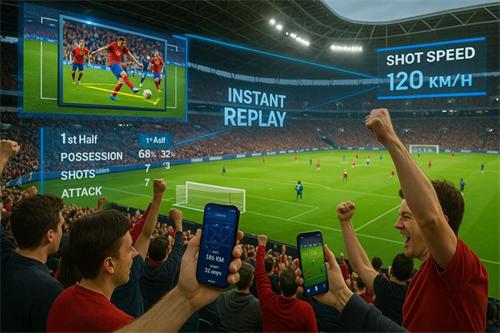
Real-time overlays: Fans point their smartphones (or eventually AR glasses) at the court to view real-time player statistics, heat maps, win probabilities, and other insights once available only to TV commentators.
Around-the-game experiences: Some venues offer AR photo opportunities (e.g., with life-size virtual players), interactive games, and digital scavenger hunts around the concourse. At SoFi Stadium in Los Angeles, the "ARound" app allows fans to simply point their smartphones at the court to unlock a world of AR effects synchronized with the live action.
Multi-angle live video and 360-degree views: Combined with 5G, fans can choose from multiple live camera feeds—from behind the goal, from drones, from the bench—all delivered with minimal latency.
Enhancing the experience for broadcasters and media: Camera systems can provide different perspectives for fans in-person or remotely; one European football operator even anticipates data traffic in a single stadium reaching hundreds of gigabits thanks to 5G and AR coverage.
How Stadiums Are Creating Personalized Experiences?
Data-driven offers: Based on your past purchases or seat location, the app might offer discounts on your favorite snacks or recommend new items.
Content tailored to you: Whether you're a casual fan, a statistics enthusiast, or attending with your family, you might receive different types of highlights, replay angles, or AR experiences tailored to your profile.
Navigation and behavioral insights: Sensors and crowd analytics enable stadiums to detect congestion, suggest less crowded routes, and offer shorter wait times, streamlining the journey within the venue.
Loyalty, Gamification, and Digital Tokens: The app now integrates loyalty points, fan tokens, digital collectibles, and other incentives for engagement, purchases, or social sharing.
Fan Experience Upgrades This Season
1. Enhanced Screens and Audio
MetLife Stadium upgrades include four new video boards, a stadium-wide sound system with over 1,000 new speakers, and upgraded subwoofers and amplifiers.
Why it matters: Clear audio and video are not only visually pleasing but also enhance the audience's emotional engagement. Crisp replays and synchronized sound enhance the immersive experience.
Note: Arrive early to observe the clarity of the visuals from your seat and note the degree of audio synchronization in different areas.
2. 5G Infrastructure and Wireless Enhancements
Thanks to 5G upgrades, data performance at venues like Ford Field and MetLife Stadium has been significantly improved.
Why it matters: A faster network means no buffering, no dead spots, and uninterrupted access to all digital features. Experience: Watch game highlights from your seat or post to social media—even in front of thousands of spectators.
3. AR and Interactive Zones
At SoFi Stadium, the ARound platform enables fans to participate in AR effects synchronized with the live action.
Why it matters: These experiences create deeper engagement and shareable moments.
Tip: Scan the court with your smartphone to see if you can unlock hidden visuals or interactive mini-games.
4. Real-Time Personalization and Data-Driven Experiences
Sports venues are increasingly leveraging fan data to deliver customized experiences—from personalized recommendations to personalized navigation.
Why it matters: It transforms the experience from a one-size-fits-all experience to a personalized one, making every fan feel valued.
Tip: Look for ways your app can provide personalized recommendations or guide you through the stadium efficiently.
5. Crowd Analysis, Routing, and Operational Efficiency
Smart stadium technology aims to eliminate common frustrations like long lines and crowded concourses.
Why it matters: The fan experience begins long before the game begins. Efficient entry, shorter lines, and smooth navigation make the game-going experience more enjoyable.
Key Points to Watch: Has crowd flow and digital signage improved significantly? Are wait times shorter than before?
Looking Ahead: What's Next?
App-Centric Matchday Experience: The stadium app will become the central hub for all interactions—from AR overlays to concessions and merchandise.
Seat Delivery: Food and drink orders may soon be delivered directly to seats, perhaps by robots or drones in the stadium.
Expanded AR and Mixed Reality: Expect entire areas or lounges dedicated to immersive experiences that blend live games with digital elements.
Edge Computing and Real-Time Analytics: Teams will analyze data in real time to optimize crowd management and dynamically tailor promotions.
Sustainability Integration: Smart lighting, waste monitoring, and energy optimization will make these venues both high-tech and eco-friendly.
Redesigned Premium Seating: VIP areas will offer exclusive digital content, private AR zones, and next-generation connectivity.
Connected Home Experience: Stadium AR and streaming capabilities can be extended to at-home audiences, connecting fans in the stadium and remote viewers in shared virtual events.
We are at an exciting turning point in live sports broadcasting. As the digitally-savvy generation becomes an increasingly important part of the fan base, their expectations are evolving rapidly. Comfortable seats and popcorn are no longer enough—today's fans crave interactivity, connectivity, and personalization.
For sports organizations, the message is clear: evolve or fall behind. For fans, the rewards are enormous—now, attending a live game can offer the same technologically rich and interactive experience as watching at home, while also experiencing the unique energy that only a stadium packed with fans can bring.
So, when you're ready to go to your next game, open your team app, explore the AR options, and try out your seat assignments—you'll notice improvements in speed, comfort, and personalization. The stadium of the future has arrived—and it's smarter, faster, and more immersive than ever before.

How Mid-Season Breaks and Schedule Congestion Affect Player Well-Being?