




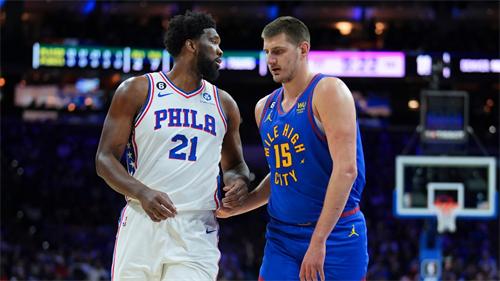
As the NBA continues to evolve, so too have the roles being asked of frontcourt players. A "big man" is no longer just someone who can rebound, defend the rim, and finish on alley-oops. Today, the NBA values players with a versatile skill set: the ability to space the floor, switch on smaller defenders, create dribble opportunities, and space the defense both vertically and horizontally. The 2025 draft will feature a unique class of big men—some traditional, some hybrid—who may accelerate this evolution.
Historically, NBA big men have had three key traits: rim protection, rebounding, and low-post scoring. From the 1980s to the early 2000s, the typical big man rebounded, protected the rim, and took the majority of his shots in the restricted area. But the rules of the game have fundamentally changed:
Spacing: Teams are increasingly asking big men to shoot, or at least threaten, long-range shots, thereby expanding the floor.
Switching and Mobility: Modern defenses switch more frequently, meaning big men sometimes have to guard smaller, quicker players, set screens, and recover.
Playmaking: Some teams now seek big men who can initiate offense, escape double-teams, and move off the ball with purpose.
Versatility: A "five" might be a true center or a forward who can play multiple positions.
Why is this topic more important than others?
The analytics era has matured: tracking shot location, switchability, and lineup versatility. Big men who can move seamlessly in space are favored.
The pace-and-space era continues to thrive: floor spacing, multi-threat offenses, and even "point forward/center" experiments (see the recent success of big men spacing the floor).
Across the league, teams are more cautiously managing their big men's playing time, seeking frontcourt players who can effectively impact the game for 20-28 minutes per night, rather than frequent usage of 35+ minutes.
Thus, the 2025 big man class could mark a turning point—teams will feel more confident drafting frontcourt players not just for "traditional" big man assignments, but for a wider range of roles.
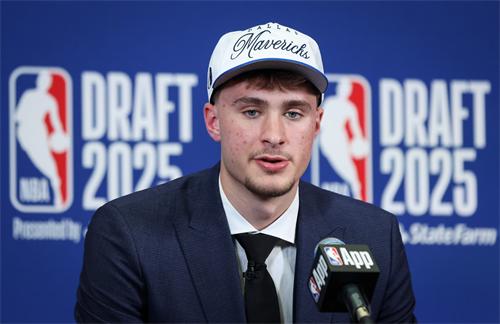
(Image from abcNews, the copyright belongs to the original author)
Outstanding Big Men in the Class of 2025
Here, we'll highlight two highly touted big men from the 2025 draft whose tools, skills, and backgrounds suggest they could shape a new frontcourt paradigm.
Kamen Maluohe
Maluaohe, standing approximately 7'2" and 250-260 pounds, possesses excellent size. He put up solid numbers in limited college playing time and showed promise as a rebounder and rim protector.
He features a very long wingspan (reportedly around 7-6 feet) and a standing reach near the top of the class for a rookie.
He combines traditional defensive duties (rim protection, rebounding) with the mobility to switch, defend multiple positions, and fit into modern defensive schemes. Scouts have noted his impressive length and potential as a defensive anchor.
Despite his limited offensive skills in college, scouts noted his potential: he was only beginning to scratch the surface offensively. His journey and development suggested he needed to be a long-term developer, not a quick superstar—meaning the team that drafted him was buying into a trajectory, not an immediate payoff.
Maruachi embodies the hallmarks of a modern big man: he can hold his own defensively, protect the rim, and possess offensive potential. If he can improve his shooting range, playmaking, and lateral quickness, he could become a highly impactful 30-minute shooter in today's NBA.
Derrick Quinn
Quinn, standing approximately 6'10" and 245 pounds, is undersized in the frontcourt but possesses a strong offensive game. He averaged approximately 30 minutes per game in college and performed well (e.g., 16.5 points and 9.0 rebounds per game). His skill set includes high-post play, face-up play, and transition play.
Quinn isn't a towering rim protector, but more of a versatile high-post center: he can play inside, face the basket, pass, and read the game—a big man who embodies the evolution of frontcourt roles.
His potential profile suggests he possesses skills beyond post-up play. In many ways, he represents a variation on the "big man as playmaker"—a role that was once rare but is gaining traction in modern roster construction.
Quinn possesses something many teams crave but few big men possess: offensive creativity in the frontcourt. If his shooting and defensive consistency can keep up, he could become a model for teams building rosters around "big men who don't just dominate in the paint."
How the 2025 Big Man Class Will Reshape the League?
Led by rising stars like Maluohe and Quinn, the 2025 big man class could impact the NBA in several substantial ways.
Roster Construction and Frontcourt Player Types
Teams drafting in 2025 and beyond may reconsider the "pure shot-blocker/rebounder" model and instead target big men with two-way versatility: defense and spacing or creation.
If big men possess traits (length, mobility, transition ability) beyond mere productivity, teams may feel more confident investing in their top big men.
Tactical Trends
With more big men capable of moving, passing, and defending multiple positions, coaches may deploy their frontcourts differently:
Running more pick-and-rolls or pick-and-rolls with big men who can finish or shoot. Switching defenses, with big men guarding wings or stretching forward.
Playing lineups with big men either starting or playing alongside smaller, "traditional" centers. The positional definition of big men is blurring further: a "5" player might sometimes play like a "4," and vice versa.
Valuation and Draft Philosophy
Teams may be more willing to draft big men earlier (unless the class lacks depth) because modern big men have a higher "ceiling."
Big men may be evaluated based more on their trait strengths (length, agility, switchability) rather than solely on traditional statistical metrics. For example, Maruachi's standing reach and wingspan significantly impacted his draft stock.
Conversely, the risk is higher—big men who don't adapt to modern demands (shooting, mobility) could decline further or be considered less valuable options.
The 2025 draft represents a compelling moment in the evolution of NBA frontcourt roles. Led by rookies like Kamen Maruachi and Derrick Quinn, we may be at a turning point: big men must possess not only size and strength, but also mobility, switchability, spacing, and playmaking.
For fans, this means that future teams may become less about "one big man, four shooters" and more about "multiple interchangeable frontcourt threats." For teams, this means the risk-reward calculus surrounding big men could tilt even more in favor of reward—assuming the developmental factors align. For players, it means the path forward requires more than just dunks and shot-blocking; it requires versatility, an expanded skill set, and a willingness to continually improve.
If this group of players lives up to its promise, we might look back and say: The 2025 class of big men didn't just produce some excellent players; they changed the way teams think about five positions.
References:
https://medium.com/data-science/visualising-evolution-of-the-nba-offence-through-data-84a30c2e3fcc
https://sportsanalytics.studentorg.berkeley.edu/articles/renaissance-big-men.html
https://www.researchgate.net/publication/394402662_A_Decade_of_Evolution_Comparative_Analysis_of_Shooting_Trends_and_Offensive_Efficiency_in_the_NBA_and_EuroLeague
https://digitalcommons.bryant.edu/cgi/viewcontent.cgi?article=1034&context=honors_mathematics

How Mid-Season Breaks and Schedule Congestion Affect Player Well-Being?