




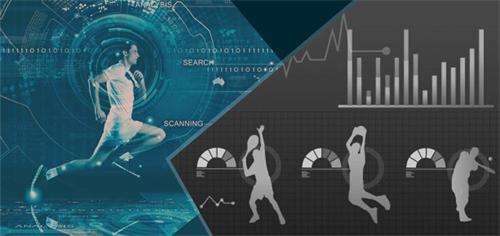
In elite sports—where every second counts and every millimeter matters—injuries remain one of the most destructive factors. They impact individual careers, team dynamics, and ultimately, club revenue. Historically, injury prevention has been both a science and an art, relying heavily on coaching intuition, athlete feedback, and physical therapist experience. But today, with the explosive growth of wearable sensors, big data, and machine learning analytics, we are entering a new era. The question is not just how athletes get injured, but when and how long they can safely compete—thus determining how many games they should play. This article explores how injury risk prediction is changing this calculation.
The Traditional Landscape: Number of Games and Injury Risk
It's commonly believed that more games equate to higher value: more playing time, more contract fulfillment, more wins. But more games also mean greater physical stress, more fatigue buildup, and a higher chance of unexpected injuries. Traditional load management strategies include rest days, rotating starters, and subjective monitoring of fatigue and soreness. These methods each have their advantages, but their predictive capabilities remain limited. What has changed is the availability of objective data: GPS tracking, accelerometers, heart rate monitors, inertial measurement units (IMUs), and athlete self-reports (e.g., health questionnaires). By analyzing and synthesizing this data, teams can now ask questions like: Based on this athlete's load history, physiological and biomechanical data, what is the probability of injury if they play X more games in Y days?
Core Concept: Workload and Injury Risk
A fundamental principle of modern training methods is that training load (including external and internal loads), if poorly managed, is closely related to injury risk. External load refers to the athlete's actual exercise volume (e.g., running distance, sprints, acceleration, and deceleration). Internal load refers to the athlete's physical responses (e.g., heart rate, subjective fatigue levels, and biochemical indicators). The greater the gap between an athlete's capabilities and the load they bear, the higher the risk of injury.
Researchers have consistently found that rapid increases in exercise load—especially acute loads relative to an athlete's chronic load—are dangerous. The so-called Acute Load to Chronic Load Ratio (ACWR) has become a widely used indicator. A meta-analysis found that higher ACWR values for total distance, sprints, and acceleration/deceleration were associated with a higher risk of injury.1
Another systematic review confirmed that workload plays a significant role in injury risk—not only in training, but also in competition and the academic pressure on student-athletes.
However, it must be emphasized that training load alone cannot accurately predict injuries. Many other factors—pre-existing injury history, biomechanics, sleep, stress, recovery, and age—complicate matters. As one commentary cautioned, “A player’s training load alone can never accurately predict injuries.”2
Analytical Intervention: From Ratios to Machines
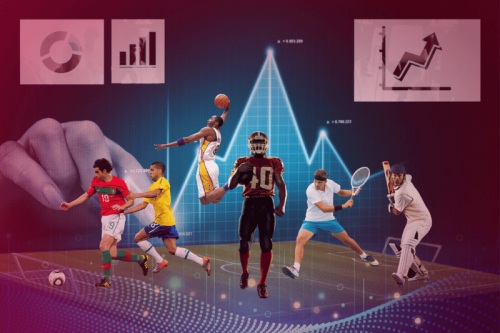
This is where data analysis comes in. Simply knowing that a high ACWR value often indicates an injury is helpful—but translating this into predictions for individual athletes and determining how many games they should play requires more sophisticated methods.
Machine Learning Injury Risk Models
Recent research shows promise. For example, a machine learning model for professional soccer uses internal and external load data (heart rate metrics and GPS/accelerometer data) to predict non-contact muscle injuries. The model achieved an accuracy of 0.78, a sensitivity of 0.73, and a specificity of 0.85. A scope-defining review found that tree-based models (such as random forests and XGBoost) generally outperformed simpler logistic regression in this area.3
However, these models are still somewhat general; they cannot reliably predict, "If athlete X plays two more games this week, his probability of injury will jump from 12% to 28%." The challenge lies in their clinical applicability: many models are developed on small datasets, have varying definitions of injury, and offer relatively wide prediction windows.
The Role of Wearable Devices and Real-Time Monitoring
Rich data from athlete tracking expands the scope of measurability. One study used GPS and accelerometer data, along with daily health questionnaires, to predict athletes' perceived health status (fatigue, sleep, stress, muscle soreness) using machine learning.4 Other systems (e.g., those from Performance Sciences) integrate biomechanical, motion capture, force plate, and laboratory data to identify mechanical risk factors and inform predictive models.
These advancements enable teams to understand the load on each athlete: not just playing time or distance covered, but also their physical condition that day, how their recent load compares to their long-term baseline, and their biomechanical weaknesses.
Translating Analysis into Actual Game Performance: Practical Implications
So, how does this translate into decisions about how many games an athlete should play? Here are a few ways clubs and competitive teams apply (and continuously refine) data-driven injury risk assessment frameworks.
1. Personalized Game Load Planning
Teams no longer use one-size-fits-all rules (e.g., "key players must rest every three games"), but instead strive to adjust game time and rotation strategies based on each athlete's current risk profile. For example, if an athlete has participated in a series of high-intensity sprint games, has a high perceived fatigue score, and their algorithmic risk score is trending upward, the team might limit them to three games over a five-game cycle instead of four.
2. Lighting Congestion and Sequence Sensitivity
Research indicates that short, intensive schedules (multiple matches in a short period) can increase the incidence of game-related injuries, especially when athletes accumulate external loads without adequate recovery. PubMed analytics can quantify how playing an extra match within this timeframe might push a player beyond their safe load threshold.
3. Long-Term Capacity Building and Short-Term Load
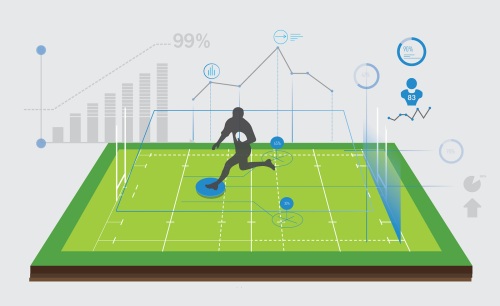
An athlete's long-term training load (i.e., the amount of training they endure over several weeks/months) enhances their adaptability. Sudden increases in training volume (even small absolute increases) may be riskier than sustained increases. Data analytics can track the ratio of recent training volume to historical baseline levels and estimate how many extra minutes/matches might exceed the safe threshold.
4. Integrated Recovery and Off-Field Risks
The number of matches is not the only influencing factor. Recovery quality, sleep, health status, training load, travel fatigue, and even psychosocial stress all increase injury risk. Advanced models take these factors into account. Therefore, from the perspective of playing time alone, an athlete may "meet" the requirements for competition, but their risk score may indicate that rest or reducing playing time is the wiser course of action.
5. Decision Support Tool, Not Deterministic Rule
It is important that the analysis provides guidance, not rigid rules. For example, the model might show: "If this athlete plays all three games this week, then their risk of injury is 18% (baseline value is 7%)." The final decision still depends on the person and requires consideration of various factors (e.g., the importance of the game, the athlete's value, the stage of the season, the athlete's willingness, etc.).
What is the future development direction for injury risk prediction and determining how many games an athlete should participate in?
Predictive Scheduling Platform
We can envision a platform where coaches can schedule matches/training sessions, and the system simulates specific risk curves for athletes: "If player A plays 40 minutes in game 8, 35 minutes in game 9, and the full game in game 10, then he can participate in games 8-10—the risk remains below 15%." Such tools allow coaches to make strategic plans weeks in advance, rather than ad-hoc decisions.
Biomechanical + Load + Genetic Integration
Future models may integrate biomechanical screening (movement patterns, force table data), genetic/biochemical risk markers, injury history, and psychosocial stress factors. The richer the data, the more personalized the predictions.
Real-Time Adjustment
Imagine a real-time data dashboard during a game: if a player's heart rate variability decreases, decelerations surge, and biomechanical/accelerometer indicators deteriorate, the system can issue an alert: "Risk threshold exceeded—consider immediate substitution." This allows coaching staff to make safe decisions about player playing time during the game.
Across Sports and Levels
While much research has focused on football, rugby, and basketball, these approaches can be extended to individual sports such as tennis and track and field, as well as youth/amateur levels. The question, "How many games/tournaments can I safely play this season?" is a common one.
Return to Game and Reload
Analyzing data is particularly useful as players return to competition. It can guide how many games a player should play after injury, what a safe training load is, and how to gradually return to full training volume, thereby reducing the risk of re-injury.
In the modern sports world, the saying "the more games, the more valuable" still holds true to a great extent—but there are exceptions. For an athlete, the appropriate number of games depends not only on ability or opportunity, but also on load, recovery, fitness, risk, and the game environment. Data analytics is fundamentally changing how we judge how many games an athlete should play, not just how many games they can play. As teams continue to adopt these tools, the ultimate winners will be those teams that can balance performance and attendance, and use data not only to train harder, but also to play smarter.
Sources:
1: https://bmcsportsscimedrehabil.biomedcentral.com/articles/10.1186/s13102-025-01332-x
2: https://sportperfsci.com/wp-content/uploads/2021/06/SPSR136_Hulin.pdf
3: https://pubmed.ncbi.nlm.nih.gov/39613453/
4: https://www.frontiersin.org/journals/physiology/articles/10.3389/fphys.2022.896928/full

How Mid-Season Breaks and Schedule Congestion Affect Player Well-Being?